What are the 2026 World Cup group-stage tiebreaker rules?
Last updated
The 2026 World Cup group-stage tiebreaker rules follow a six-step hierarchy to determine team rankings when points are equal: total points, goal difference, goals scored, head-to-head record between tied teams, fair-play points, and finally a drawing of lots.
This systematic approach ensures every group position is decided fairly, with FIFA's established criteria providing clear resolution for any scenario where teams finish level on points.
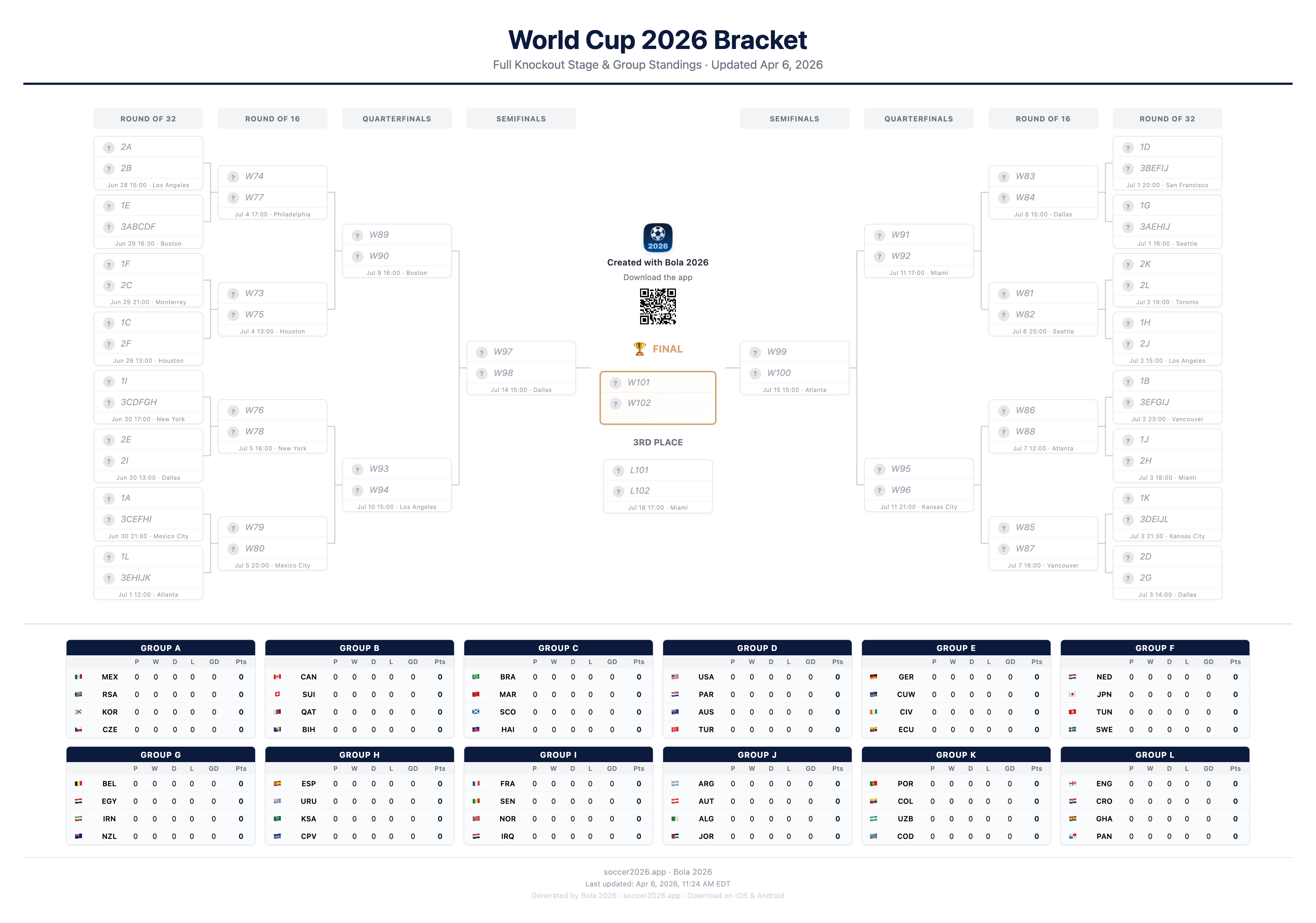
The Complete Tiebreaker Hierarchy
When teams finish level on points in their group, FIFA applies these criteria in strict order. Goal difference—the margin between goals scored and conceded—typically separates most tied teams. If that fails to decide rankings, total goals scored rewards attacking play as the third criterion.
Head-to-Head and Fair Play Factors
Should the first three criteria leave teams still tied, their direct meetings (head-to-head record) determine ranking. This includes points, goal difference, and goals scored in matches between the tied teams only. Fair-play points, calculated from yellow and red cards received, serve as the fifth tiebreaker. As a last resort, FIFA conducts a drawing of lots—though this rarely occurs at major tournaments. Fans can track live group standings and apply these rules in real-time using tools like Bola 2026 during the tournament.
Frequently asked questions
What happens if teams are tied on points and goal difference?
Goals scored becomes the deciding factor, rewarding teams with more attacking output during the group stage.
How do head-to-head tiebreakers work in World Cup groups?
FIFA examines only the matches between tied teams, applying the same criteria: points, goal difference, then goals scored in those specific games.
What are fair-play points in World Cup tiebreakers?
Teams lose points for disciplinary infractions: yellow cards (-1), indirect red cards (-3), direct red cards (-4), with better-behaved teams ranking higher.